

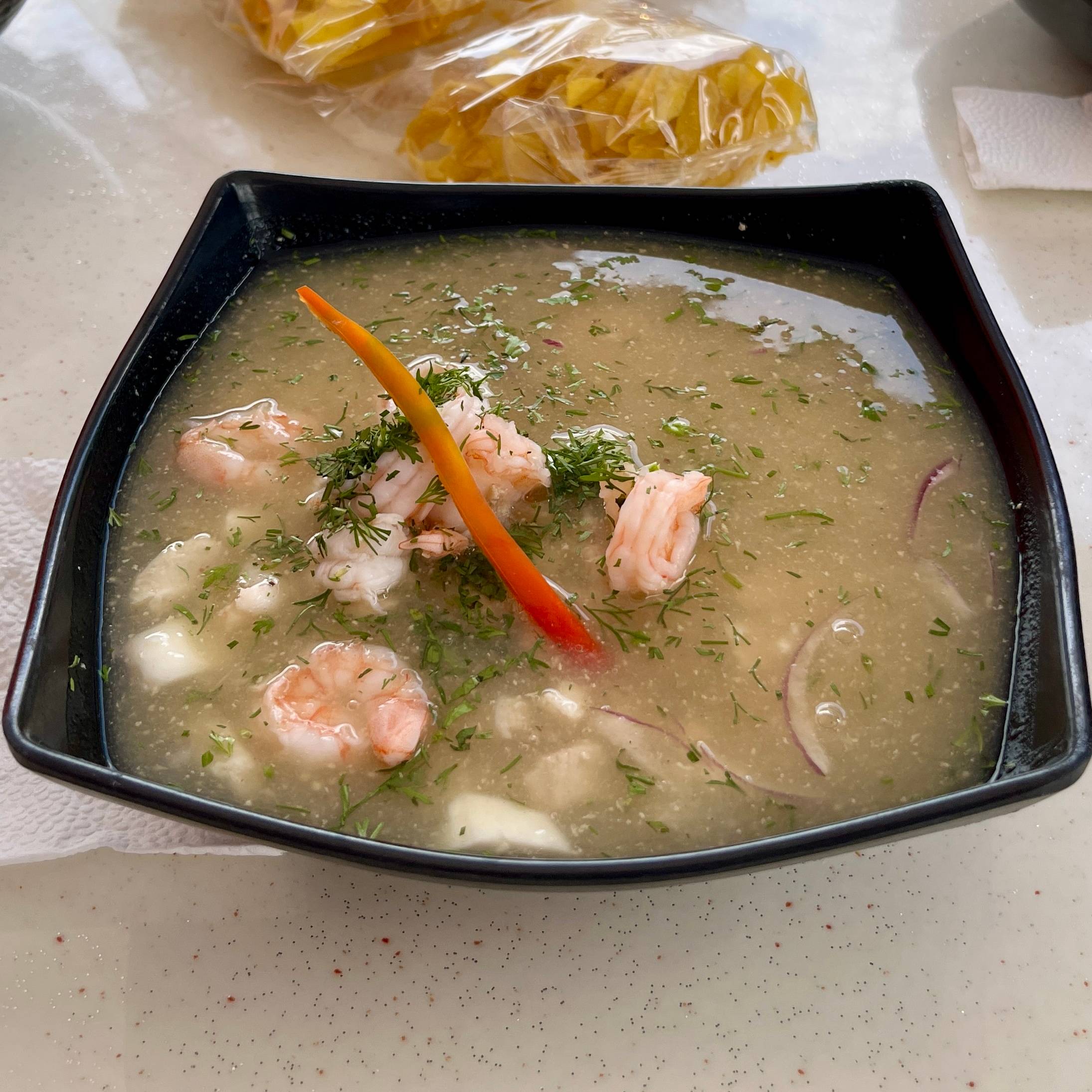
A few months after we moved here, I walked Michelle and a visiting mate of mine past three perfectly good restaurants to get to a fourth I'd seen praised online. We sat down. The music was too loud, the tables were empty, and the almuerzo was nine dollars. Michelle, who's from Quito and has spent her whole working life in tourism, didn't say anything. She just gave me the look. The food was fine. It was also the wrong call, and we both knew it.
That happens to everyone here. The signal is bad. Google reviews are a mess. The places that look most welcoming from the street are sometimes the worst, and the ones that look half-closed are sometimes the best meal of your week.
So I asked James Li, author of Cuenca Eats, how he sorts the signal from the noise in thirty seconds, and what newcomers get wrong most often. His answers, lightly edited, are the kind of local knowledge that usually takes years to pick up.
The 30-second walk-up test
This one goes first because you can use it tomorrow.
Walk in
I smell the food from the sidewalk. I look in. It's packed and everyone is eating. The clientele is diverse: kids, old women, hard-hatted laborers, uniformed workers, businessmen, maybe a dog or pigeon wandering around. Coke and Pepsi come in glass bottles.
Walk away
Lunch menu entrees start at $8, tourist-filled, water only available by the bottle, loud music combined with empty tables, pushy sidewalk touts.
Photograph that. Save it to your phone notes. It'll save you years of dragging your visiting in-laws to disappointing lunches, which, take it from me, is a specific kind of regret.
The $8 ceiling is the tell. A Cuencano almuerzo (soup, main, juice, sometimes dessert) tops out around $3.50 at a good spot, maybe $5 at a fancier one. When the prices climb past that, you've usually crossed into food priced for visitors who don't have a local benchmark yet. It might still taste fine. It's just not what the locals around you are eating, and they're the ones to copy.
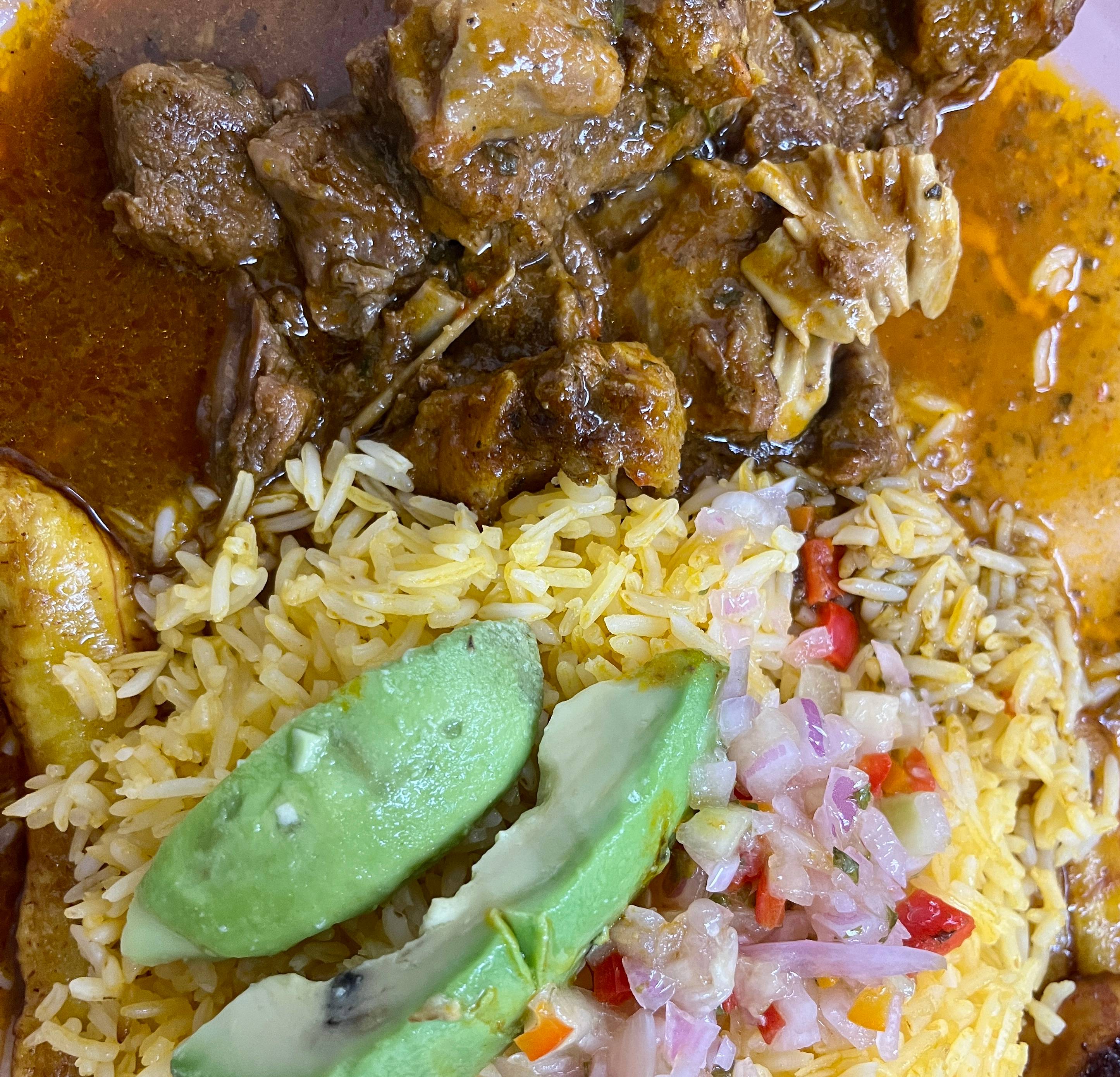
The other thing I always look for, and honestly just love, is the juice. A proper almuerzo comes with a glass of fresh fruit juice, blended that morning from whatever's in season: tomate de árbol, maracuyá, mora, or guanábana (soursop, the one I order every time). A good jugo is half the reason I look forward to lunch here.
The mistake almost every newcomer makes
I asked James what trips people up most when they order. His answer:
They only order from places that have food they recognize.
Sounds obvious, but it's the trap almost everyone falls into. He went on:
They forget that Ecuador and its neighbors are the origin point for tomatoes, peppers, beans, potatoes, corn, peanuts, cassava and chocolate. [...] Where North Americans are used to a few varieties of potatoes (russet, red and white), Ecuadorians enjoy over 400 native cultivated distinctive varieties. Cuenca's mercados are filled with fruits that outsiders generally didn't know existed.
You moved to Ecuador. You're surrounded by 10,000 years of agricultural know-how. And it's still tempting to default to the same pizza you'd order back home. I've been guilty of that too.
Here's what James suggests:
Point to anything on another table that looks good that you don't recognize and order it. Pretend you're 25 years old and backpacking around the world for adventure. Ask your waiter to bring you something they love that's truly unique to this part of the world. Do what the locals are doing. Eat what they eat.
Try it once. The waiter's usually glad you asked, and you'll end up with something you'd never have chosen yourself. Now, a small nuance: you'll occasionally get something that isn't to your taste. That's the price of admission, and it's a cheap one. Chalk it up to experience and go again.
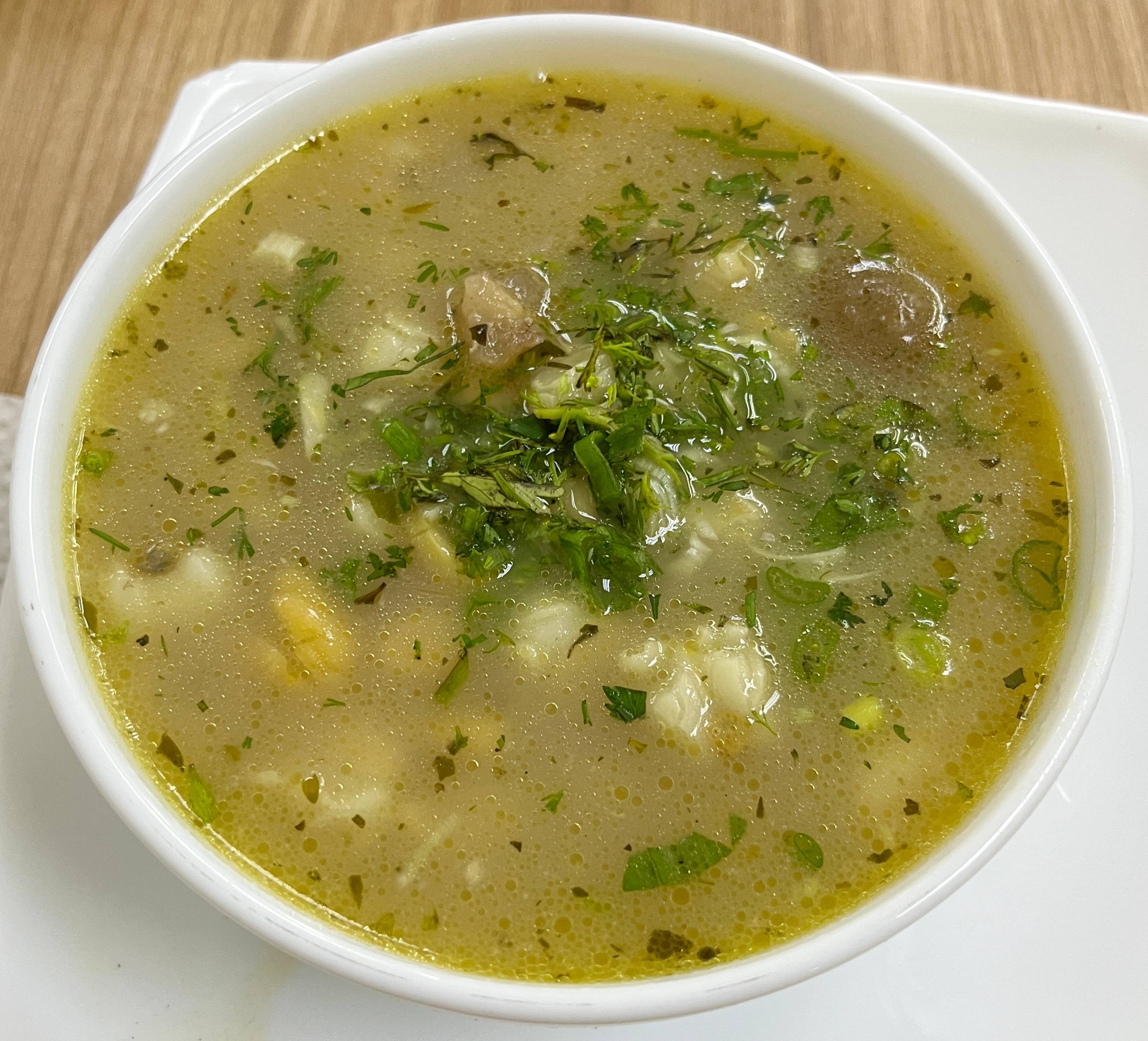
The under-rated almuerzo list
I asked James which spots in his book he wishes more expats noticed, the ones tourists never find but he himself craves when he hasn't been in a while:
Here are a few where I never see tourists or gringos but crave myself when I don't go for a while: Nuevo Paraíso, the upstairs almuerzo stalls at 10 de Agosto Mercado (especially pescado frito), Mangos Restaurante, Litto, La Estación 12, Carne y Fuego, Las Picaditas de Manaba.
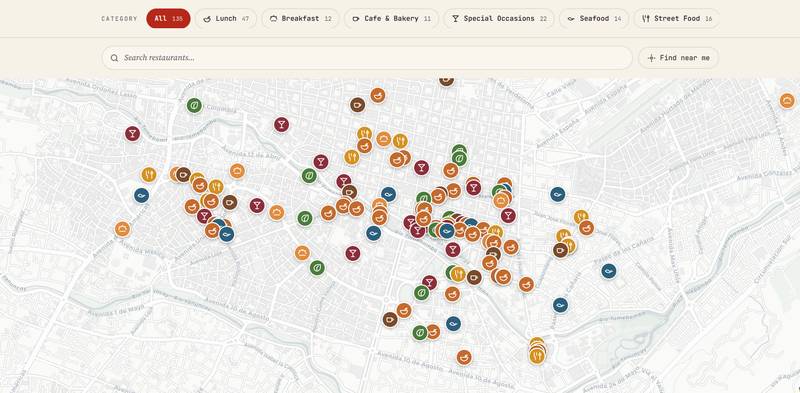
All seven are on our Cuenca Eats map. Click any of them for hours, address, the closest map pin, and a one-line quote from James's book. The map is searchable, so if you want to put his 30-second rule to the test, start with one of those names. Walk in. Run the diverse-clientele-and-fresh-juice check. I reckon it'll pass.
Your Yapa: breakfast at the mercado
One bonus from James, only loosely related but worth your morning: breakfast at the outdoor stalls at 12 de Abril Mercado. He told me this is one of the things he and his wife always do when out-of-towners come to stay. The mercado opens early. Pick a stall with a line. Order whatever the people in front of you ordered. Have an excellent morning for a couple of dollars.
Why this knowledge is hard to get otherwise
Most of the restaurant advice you'll find online for Cuenca was written by someone on a one-week visit, ranking what they remember from three meals. Our map points you to the right tables, but that's only the surface. The deeper question, why Ecuadorian food tastes the way it does, is the bit most people never bother to learn before they leave.
That's the gap James's book fills. There are reviews in there, but Cuenca Eats is more than just that. It's the cultural and historical backstory: which dishes came from the coast, which from the Sierra, why the indigenous food traditions of the Cañari (Cuenca's pre-Incan inhabitants) still turn up in your soup, what "seco de pollo" actually means and why it isn't chicken jerky despite the name. (For the record: it's because the stew has less liquid than agua de pollo, the chicken soup. James got that one from his solar installer, who heard it might trace back to a tourist who once asked for "seconds of pollo" in broken Spanglish. James calls that version "perhaps an urban myth," and I'd believe it.)
Read the book and you'll start recognizing what's on the menu before the waiter brings it. You'll understand why your neighbor never eats fish on Mondays and why the almuerzo always opens with soup. And you'll finally stop defaulting to the pizza you could get anywhere.
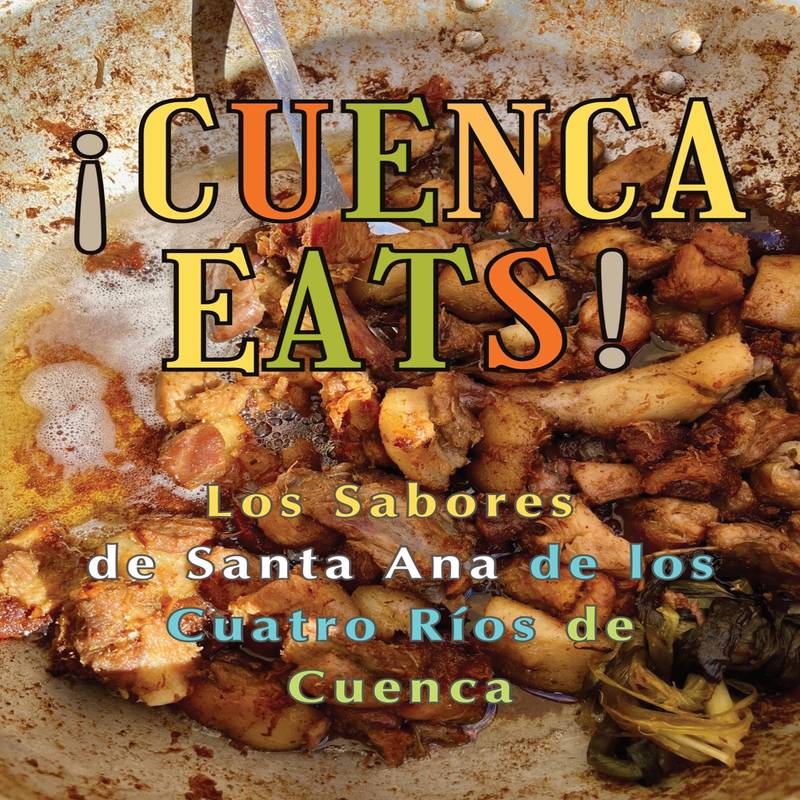
Read the full book → A bilingual guide to eating in Cuenca.
Prefer a physical copy? Full-color copies are sold at the iTur tourism office at Parque Calderón (map).