

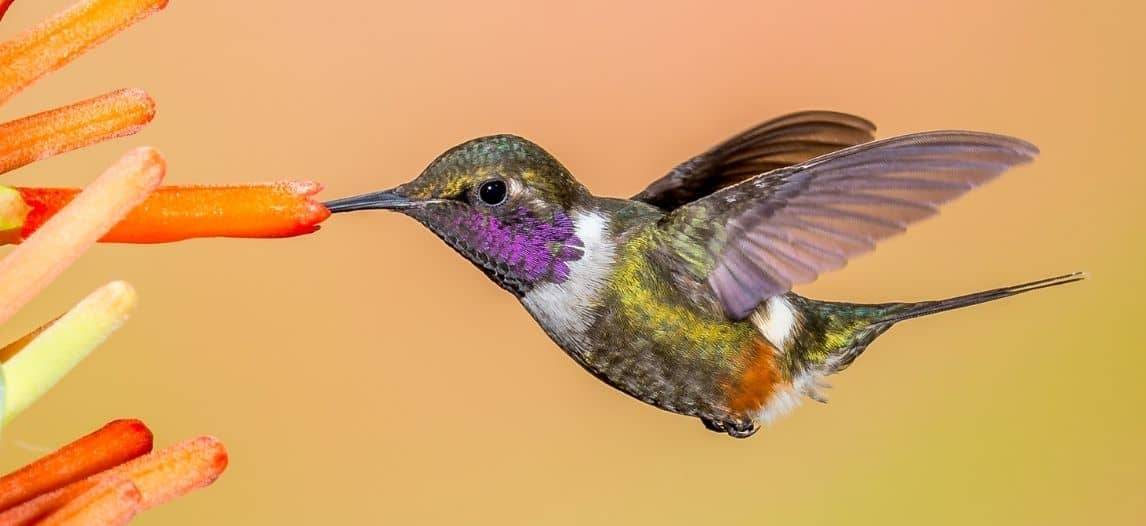
Ecuador is the Mecca for hummingbird watchers and photographers. With more than 130 of the world's 340 species, it's no surprise Ecuador is known as the "Land of Hummingbirds" and the hummingbird capital of the world.
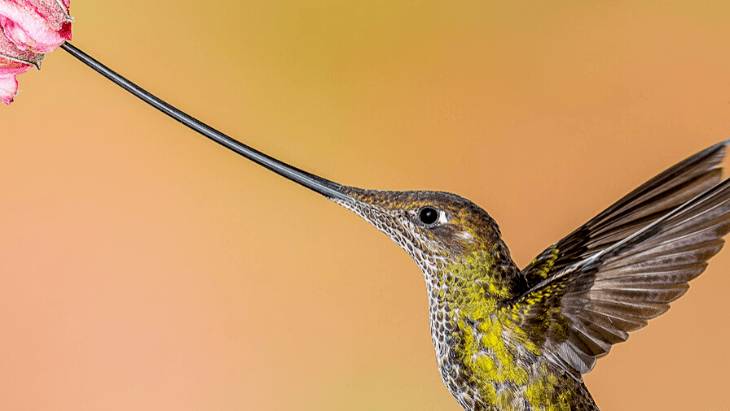
Sword Billed Hummingbird photo taken in Ecuador's eastern slope. Photo Andy Morffew
Hummingbirds (colibríes in Spanish) have long fascinated us with their speed, agility, compact size and perfectly adapted beaks and tongues. Many cultures have placed spiritual significance on these pint-sized marvels. The Aztec god of war, Huitzilopochtli, is depicted as a hummingbird because of his belief that hummingbirds contained the spirit of fallen warriors.

Huitzilopochtli the Aztec God of the Sun and War is also known as "Hummingbird of the South"
Christians associate hummingbirds with the resurrection because they appear lifeless when sleeping, but will rapidly fly away and 'resurrect' when then sun rises.
What hummingbirds mean to us
The symbolism that resonates strongest with me is from the Native Americans who view hummingbirds as healers or a spirit-being helping those in need.
You see, we went through a very difficult time with the loss of a loved one and over the next week two events happened:
A sentimental tree was constantly visited by a new hummingbird, and
A female built her nest in a tree located in a prime viewing spot from our living room. Later on her baby joined us too.
These may seem like trivial events. But, at the time they were beautiful moments of reprieve from the persistent despair we were all feeling. For this I was incredibly grateful.
From then on hummingbirds have taken on a very special meaning within our house, elevated to the position of our family symbol.
I've heard similar stories from various friends and read numerous other stories online about similar experiences. This leads me to think there are many people out there that share the same appreciation for hummingbirds on numerous levels, including physical beauty and spiritual.
Hummingbird Infographic
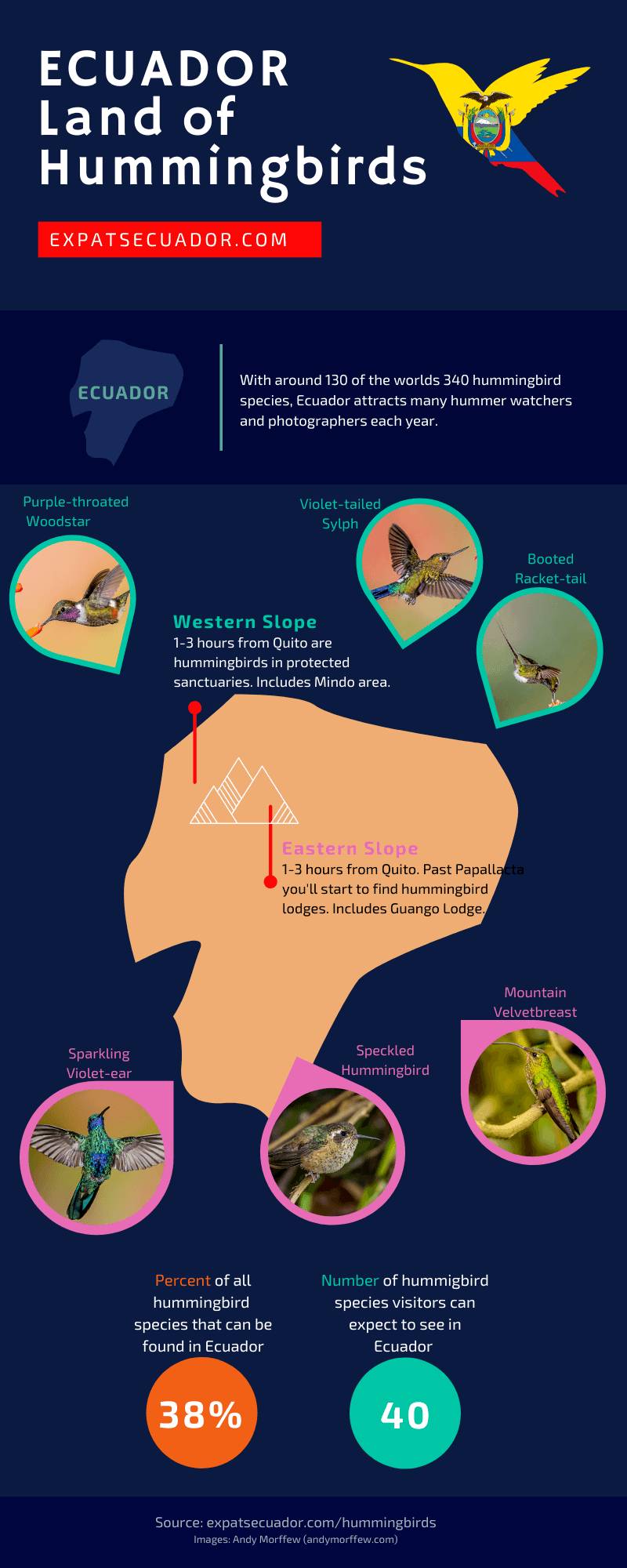
Feel free to share the above hummingbird infographic. You can also download the high-res version here.
Where in Ecuador can I find hummingbirds?
Everywhere! Well, except the Galapagos - Darwin certainly would have mentioned these remarkably adapted creatures if so...
This doesn't mean you're going to come across Hummingbird nests on every street in Quito or Guayaquil. But, get a few minutes outside of the city and you can potentially have an encounter.
The cloud forests have the highest concentration of hummingbirds, so that's a great place to start your journey.
The most popular areas for tourists to visit are divided into the eastern & western slopes of the Andes mountain range that runs through Ecuador.
Some of the most popular spots for the eastern and western slopes have been included in the map below (blue = east slope, red = west slope). These are mostly accessible from Quito, but don't think for a second that these are the only places to find hummingbirds in Ecuador - they just happen to be the most popular.
Western Slope of the Ecuadorian Andes
If you're like many visitors to Ecuador, this is likely where you're going to start your hummingbird exploration.
Mindo Valley
Mindo has quickly become one of the premier bird-watching locations in the world. The lush cloud forest provides rich biodiversity, allowing visitors to see many of Ecuador's birds, plants, insects, vegetation, and pack in some other sightseeing activities like chocolate and coffee tours, rafting, ziplining, and hiking. All within a 2-hour drive of Quito.
Reserva Ecologica Yanacocha
With over 15 hummingbird species (several endemic), the Reserva Ecologica Yanacocha is well-known for watchers looking for a quick weekend trip from Quito.
It takes around 1 hour to get to Reserva Ecologica Yanacocha from Quito, making it the closest of the western slope locations to do some serious hummer watching.
Tandayapa Valley
At least 17 species of hummingbird have been spotted around the Tandayapa Valley, including the Purple-throated Woodstar (Calliphlox mitchellii) .
Two of the popular spots to bird watch and stay are:
Bellavista Cloud Forest Reserve & Lodge
Refugio Paz de Las Aves
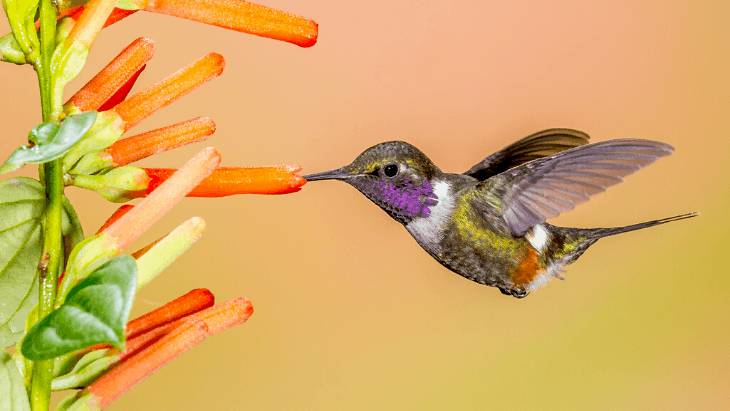
Purple-throated Woodstar (Calliphlox mitchellii). Photo Andy Morffew
Reserva Mashpi Shungo
A little further out, about 3 hours from Quito, is the privately held Reserva Mashpi Shungo. In addition to howler monkeys, you can find 13 types of hummingbird, including the Violet-tailed Sylph (Aglaiocercus coelestis).
Whilst here, you can also treat yourself at the luxurious Mashpi Lodge.
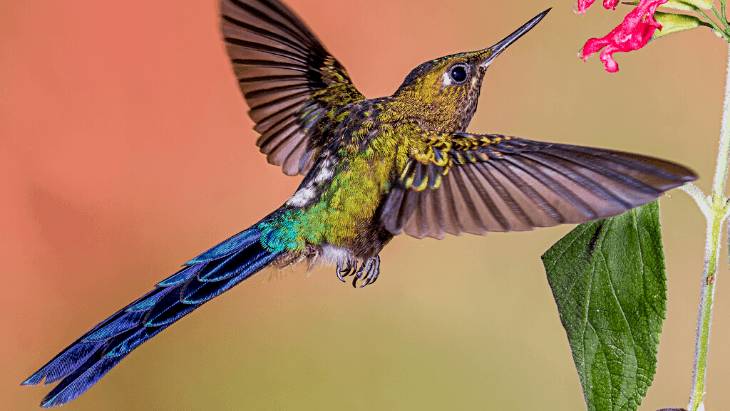
Violet-tailed Sylph (Aglaiocercus Coelestis). Photo Andy Morffew
Silanche Bird Sanctuary
Still around 3 hours from Quito is the Silanche Bird Sanctuary. In addition to several toucans, you can also spy around 7 hummingbird species, including the Booted Racket-tail (Ocreatus underwoodii).
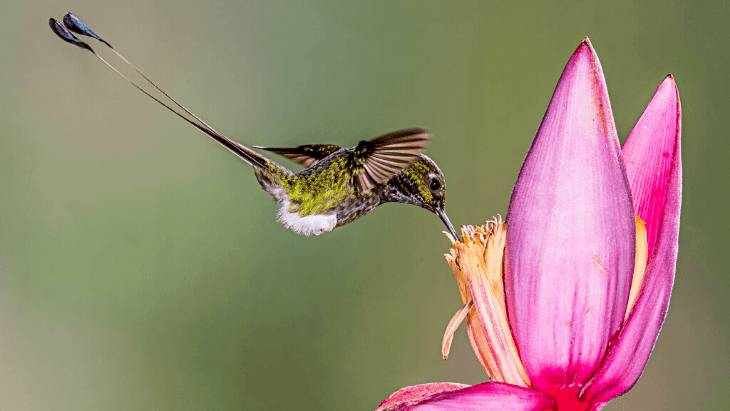
Booted Racket-tail (Ocreatus underwoodii). Photo Andy Morffew
Eastern Slope of the Andes Hummingbirds
The eastern slopes of the Ecuadorian Andes starts about an hours drive east of Quito, heading past Papallacta. Hint - be sure to give yourself some time to soak up the hot springs in Papallacta.
Puembo Birding Garden
I've included this spot on the list because it is a convenient starting/stopping off point given its close proximity to Quito's international airport. If your sole aim of visiting Ecuador is bird watching, then staying here will mean you don't need to go into Quito and you can start enjoying some 35+ different species of birds, including several hummingbirds.
Guango Lodge
Situated about 10 minutes past Papallacta is Guango Lodge. Here you can see around 17 types of hummingbirds in well-maintained gardens. These include the Mountain Velvetbreast (Lafresnaya lafresnayi).
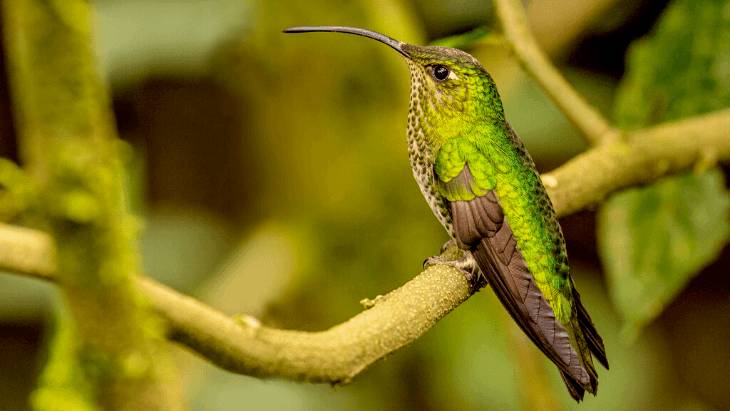
Mountain Velvetbreast (Lafresnaya lafresnayi). Photo taken in Guango Lodge by Andy Morffew
Hosteria Hda. Cumandá
Continuing along the E20, about 2 hours from Quito is Baeza. This lesser known little town has several options to stay and view the many animal and bird species in the area. Approx 6 types of hummingbirds have been known to live here, including the Speckled Hummingbird (Adelomyia melanogenys).
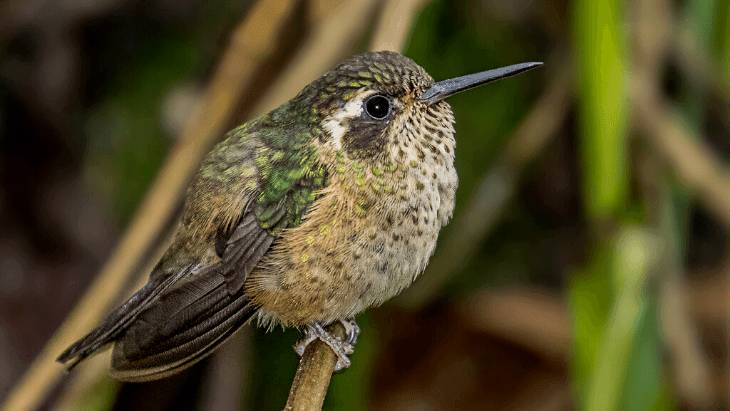
Speckled Hummingbird (Adelomyia melanogenys). Photo: Andy Morffew
Cosanga
Turning right onto the E45 will have you at Cosanga, around 2.5 hours from Quito. This town includes bird watching options like Cabañas San Isidro. Here, around 10 species of hummingbird have been spotted, including the Sparkling Violet-ear (Colibri coruscans).
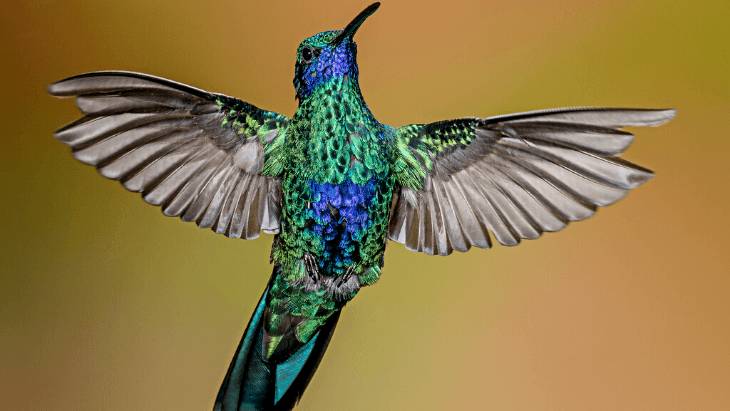
Sparkling Violet-ear (Colibri coruscans). Photo: Andy Morffew
WildSumaco Lodge
Continuing down the Ecuador's Eastern Slope, turning left at Narupo onto the E20 for around 40 minutes and then left at Wawa Sumaco towards the Sumaco Volcano, you'll find the most remote lodge on the list - WildSumaco Lodge. This birding lodge has been know to contain 21 species of hummingbird.
Southern Ecuador
Moving further south down the eastern slope you'll pass through other areas such as Baños, Cuenca (where we live) and Loja. Whilst you won't find many bird tour companies offering tours here, that doesn't mean there aren't quality hummingbird spotting opportunities.
Giant Hummingbird (Patagona gigas)
One of the 5 different species that regularly visit our home in Cuenca is the Giant Hummingbird. We love having him visit us because his large size seems to calm down some of the smaller, but more aggressive, hummingbirds. They seem to know that this larger hummer deserves respect and they agree to give him some space.
This brings a more harmonious vibe to the 3-4 hours in the morning when the hummingbirds are at their busiest and creating the most noise (and we might still be sleeping!). Check out the Giant Hummingbird in this video:
Giant hummingbird in our backyard, Cuenca
Where does the Giant Hummingbird live?
The giant hummingbird's habitat extends from Ecuador down to Argentina and Chile and can be found on both slopes of the Andes mountains. This covers a sizeable range of 1,200,000 km2.
How long is the Giant Hummingbird?
They are around 23 cm (9.1 in) long, with a wingspan of approx 21.5 cm (8.5 in) and weigh 18–24 g (0.63–0.85 oz). This is about double the weight of the next heaviest hummingbird.
How many Giant Hummingbirds are left in the world?
There is an estimated 10,000+ adult Giant Hummingbirds in the wild.
All Ecuadorian hummingbird species
For all you hardcore hummer fans, here's the list of all the different species you can find in Ecuador along with their scientific names:
Common name | Scientific name | Common name | Scientific name |
|---|---|---|---|
Amazilia hummingbird | Amazilis amazilia | Amethyst woodstar | Calliphlox amethystina |
Amethyst-throated sunangel | Heliangelus amethysticollis | Andean emerald | Uranomitra franciae |
Band-tailed barbthroat | Threnetes ruckeri | Black-bellied thorntail | Discosura langsdorffi |
Black-breasted puffleg | Eriocnemis nigrivestis (EM) | Black-eared fairy | Heliothryx auritus |
Black-tailed trainbearer | Lesbia victoriae | Black-thighed puffleg | Eriocnemis derbyi |
Black-throated brilliant | Heliodoxa schreibersii | Black-throated hermit | Phaethornis atrimentalis |
Black-throated mango | Anthracothorax nigricollis | Blue-chested hummingbird | Polyerata amabilis |
Blue-chinned sapphire | Chlorestes notata | Blue-fronted lancebill | Doryfera johannae |
Blue-headed sapphire | Chrysuronia grayi | Blue-mantled thornbill | Chalcostigma stanleyi |
Blue-tailed emerald | Chlorostilbon mellisugus | Blue-throated hillstar | Oreotrochilus cyanolaemus (E-M) |
Blue-tufted starthroat | Heliomaster furcifer (H) | Booted racket-tail | Ocreatus underwoodii |
Bronze-tailed plumeleteer | Chalybura urochrysia | Bronzy hermit | Glaucis aeneus |
Bronzy Inca | Coeligena coeligena | Brown Inca | Coeligena wilsoni |
Brown violetear | Colibri delphinae | Buff-tailed coronet | Boissonneaua flavescens |
Buff-tailed sicklebill | Eutoxeres condamini | Buff-winged starfrontlet | Coeligena lutetiae |
Chestnut-breasted coronet | Boissonneaua matthewsii | Choco daggerbill | Schistes albogularis |
Collared Inca | Coeligena torquata | Crowned woodnymph | Thalurania colombica |
Ecuadorian hillstar | Oreotrochilus chimborazo | Ecuadorian piedtail | Phlogophilus hemileucurus |
Emerald-bellied puffleg | Eriocnemis aline | Empress brilliant | Heliodoxa imperatrix |
Esmeraldas woodstar | Chaetocercus berlepschi (EM) | Fawn-breasted brilliant | Heliodoxa rubinoides |
Festive coquett | Lophornis chalybeus | Fiery topaz | Topaza pyra |
Fiery-tailed awlbill | Avocettula recurvirostris | Fork-tailed woodnymph | Thalurania furcata |
Geoffroy's daggerbill | Schistes geoffroyi | Giant hummingbird | Patagona gigas |
Glittering-throated emerald | Chionomesa fimbriata | Glowing puffleg | Eriocnemis vestita |
Golden-breasted puffleg | Eriocnemis mosquera | Golden-tailed sapphire | Chrysuronia oenone |
Gorgeted sunangel | Heliangelus strophianus | Gorgeted woodstar | Chaetocercus heliodor |
Gould's jewelfront | Heliodoxa aurescens | Gray-breasted sabrewing | Campylopterus largipennis |
Gray-chinned hermit | Phaethornis griseogularis | Great sapphirewing | Pterophanes cyanopterus |
Great-billed hermit | Phaethornis malaris | Green hermit | Phaethornis guy |
Green thorntail | Discosura conversii | Green-backed hillstar | Urochroa leucura |
Green-crowned brilliant | Heliodoxa jacula | Green-fronted lancebill | Doryfera ludovicae |
Green-headed hillstar | Oreotrochilus stolzmanni | Greenish puffleg | Haplophaedia aureliae |
Green-tailed goldenthroat | Polytmus theresiae (H) | Green-tailed trainbearer | Lesbia nuna |
Hoary puffleg | Haplophaedia lugens | Humboldt's sapphire | Chrysuronia humboldtii |
Lazuline sabrewing | Campylopterus falcatus | Lesser violetear | Colibri cyanotus |
Little sunangel | Heliangelus micraster | Little woodstar | Chaetocercus bombus |
Long-billed hermit | Phaethornis longirostris | Long-billed starthroat | Heliomaster longirostris |
Long-tailed sylph | Aglaiocercus kingii | Many-spotted hummingbird | Taphrospilus hypostictus |
Mountain avocetbill | Opisthoprora euryptera | Mountain velvetbreast | Lafresnaya lafresnayi |
Napo sabrewing | Campylopterus villaviscensio | Neblina metaltail | Metallura odomae |
Olive-spotted hummingbird | Talaphorus chlorocercus | Pale-tailed barbthroat | Threnetes leucurus |
Peruvian sheartail | Thaumastura cora (H) | Pink-throated brilliant | Heliodoxa gularis |
Purple-backed thornbill | Ramphomicron microrhynchum | Purple-bibbed whitetip | Urosticte benjamini |
Purple-chested hummingbird | Polyerata rosenbergi | Purple-collared woodstar | Myrtis fanny |
Purple-crowned fairy | Heliothryx barroti | Purple-throated sunangel | Heliangelus viola |
Purple-throated woodstar | Calliphlox mitchellii | Rainbow starfrontlet | Coeligena iris |
Rainbow-bearded thornbill | Chalcostigma herrani | Reddish hermit | Phaethornis ruber |
Royal sunangel | Heliangelus regalis | Rufous-breasted hermit | Glaucis hirsutus |
Rufous-capped thornbill | Chalcostigma ruficeps | Rufous-crested coquette | Lophornis delattrei (H) |
Rufous-gaped hillstar | Urochroa bougueri | Rufous-tailed hummingbird | Amazilia tzacatl |
Rufous-throated sapphire | Hylocharis sapphirina | Rufous-vented whitetip | Urosticte ruficrissa |
Sapphire-spangled emerald | Chionomesa lactea (H) | Sapphire-vented puffleg | Eriocnemis luciani |
Shining sunbeam | Aglaeactis cupripennis | Short-tailed woodstar | Myrmia micrura |
Spangled coquette | Lophornis stictolophus | Sparkling violetear | Colibri coruscans |
Speckled hummingbird | Adelomyia melanogenys | Spot-throated hummingbird | Thaumasius taczanowskii (H) |
Straight-billed hermit | Phaethornis bourcieri | Stripe-throated hermit | Phaethornis striigularis |
Sword-billed hummingbird | Ensifera ensifera | Tawny-bellied hermit | Phaethornis syrmatophorus |
Tooth-billed hummingbird | Androdon aequatorialis | Tourmaline sunangel | Heliangelus exortis |
Tumbes hummingbird | Thaumasius baeri | Turquoise-throated puffleg | Eriocnemis godini |
Tyrian metaltail | Metallura tyrianthina | Velvet-purple coronet | Boissonneaua jardini |
Violet-bellied hummingbird | Chlorestes julie | Violet-fronted brilliant | Heliodoxa leadbeateri |
Violet-headed hummingbird | Klais guimeti | Violet-tailed sylph | Aglaiocercus coelestis |
Violet-throated metaltail | Metallura baroni (EM) | Viridian metaltail | Metallura williami |
Western emerald | Chlorostilbon melanorhynchus | White-bearded hermit | Phaethornis hispidus |
White-bellied woodstar | Chaetocercus mulsant | White-chinned sapphire | Chlorestes cyanus |
White-necked jacobin | Florisuga mellivora | White-tipped sicklebill | Eutoxeres aquila |
White-vented plumeleteer | Chalybura buffonii | White-whiskered hermit | Phaethornis yaruqui |
Wire-crested thorntail | Discosura popelairii | Cell | Cell |
Are you planning a visit to Ecuador to check out hummingbirds? Please feel free to let us know in the comments where you're going and whether you're doing it by yourself or through a tour group.
Image credits: I have not taken the incredibly superb photos of hummingbirds used in this article. I wish I was that talented with a camera. They are from a UK photographer, Andy Morffew. If you like the photos, let him know on his website & peruse his other fantastic wildlife images.